REVIEW · ANCHORAGE
eBike History Tour of Anchorage
Book on Viator →Operated by Freewheel Art and E-bike Tours · Bookable on Viator
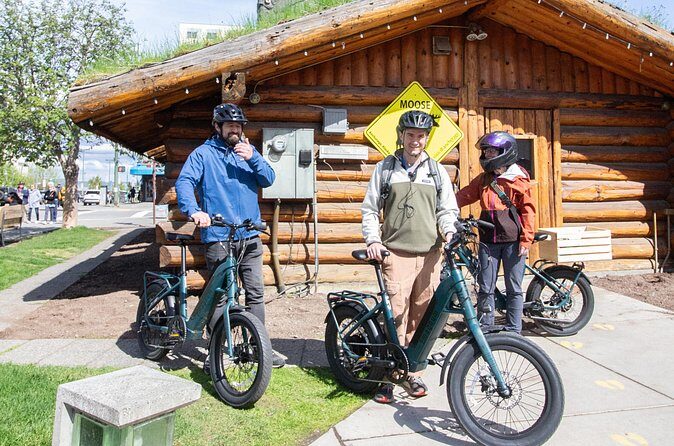
A good Anchorage bike day starts with a great setup. This eBike History Tour strings together iconic spots with an easy-going pace, and I like that you’re given waterproof gloves and a rain poncho so you can stay comfortable even if the weather changes its mind.
Two things stand out right away: Lee runs a hands-on e-bike lesson before you pedal off, and the tour keeps a smart balance between motion and story. One thing to consider is that it’s still a bike tour for about 3 hours, so you’ll want a moderate fitness level and a willingness to ride through some stretches of trail.
In This Review
- Key Highlights You’ll Feel on Day One
- Price and What You’re Really Getting for $130
- Where the Tour Begins: Freewheel’s Anchorage Base
- The E-Bike Lesson: Why It Sets Up the Whole Ride
- Stop-by-Stop: Oscar Anderson to Westchester Lagoon
- Stop 1: Oscar Anderson House Museum
- Stop 2: Delaney Park Strip and a Preserved Locomotive
- Stop 3: Tony Knowles Coastal Trail Views (Cook Inlet and Beyond)
- Stops 4 and 5: Chester Creek Greenbelt and Campbell Creek Greenbelt
- Stop 6: Alaska Railroad Depot on 1st Avenue
- Stop 7: Valley of the Moon Park
- Stop 8: Westchester Lagoon and Salmon Habitat Remediation
- What’s Included (and What to Bring)
- The Timing: 3 Hours That Don’t Feel Like a March
- How This Tour Fits Different Travelers
- Booking Timing: When to Lock It In
- Should You Book the eBike History Tour of Anchorage?
- FAQ
- What’s the tour length?
- Where does the tour start and end?
- What’s included with the tour price?
- Do I need to bring water?
- Is there a limit on group size?
- Can I cancel for a full refund?
Key Highlights You’ll Feel on Day One
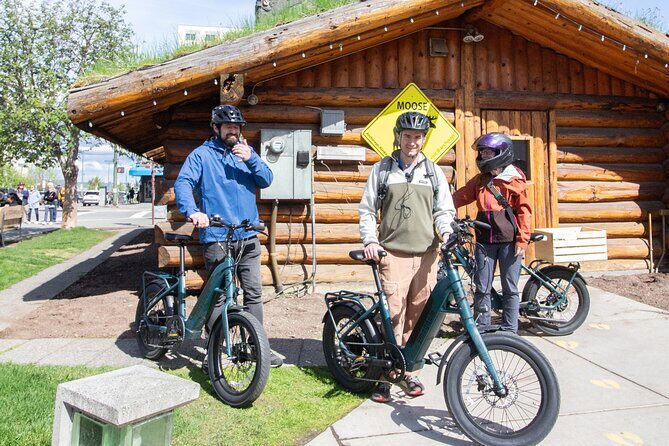
- A pre-tour e-bike lesson with Lee so you’re not guessing at the first turn
- Small group size (max 6) keeps the pace friendly and questions easy to answer
- Railroad-themed history stops that connect Anchorage’s past to the present
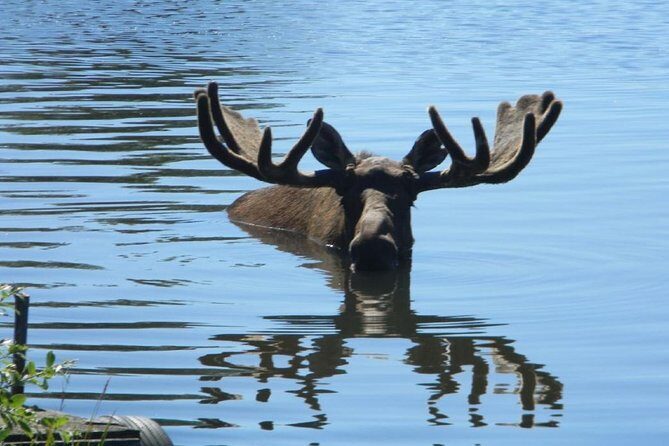
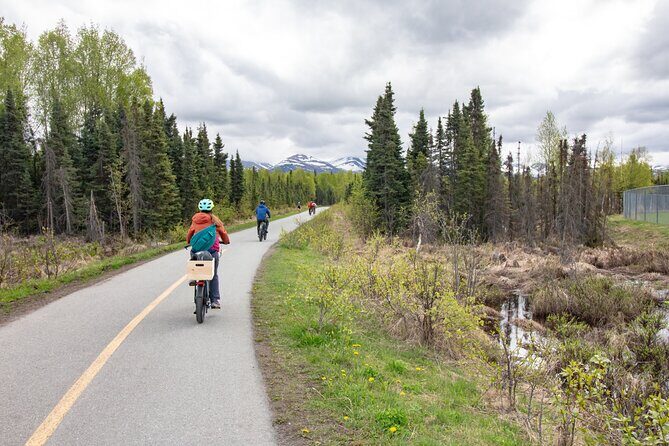
- Creek-and-coastal trails with real wildlife odds like moose and bears (and sometimes belugas)
- Weather-ready included gear: rain poncho, waterproof gloves, helmet, and storage bag
- All-day views without long distances: Cook Inlet, the Chugach Mountains, and salmon habitat areas
Price and What You’re Really Getting for $130
At $130 per person for about 3 hours, this is a mid-range price that makes sense because you’re not just paying for a route. You’re paying for guide-led storytelling, e-bike use, and safety/comfort gear that helps you actually enjoy the ride instead of managing hassles.
A few built-in value points matter:
- Gear is included, including helmet, waterproof gloves, and a rain poncho. Those are the kinds of costs that add up fast if you’re renting or packing them yourself.
- Coffee and/or tea are included, which turns the tour from pure sightseeing into a more relaxed experience.
- The stops you hit have free admission in the time you spend there, like the Oscar Anderson House Museum and the quick history presentations along the way.
If you’re the type who likes your vacation days structured but not rushed, this tour fits well. If you hate riding bikes for long stretches, it may feel like too much effort—though the e-bike help takes the sting out.
Other cycling tours in Anchorage
Where the Tour Begins: Freewheel’s Anchorage Base
You meet back at Freewheel Art & E-Bike Tours at 1666 Cache Dr, Anchorage. That matters more than it sounds. A single, familiar start point makes it easy to arrive, get kitted up, and avoid the “where do we go now?” scramble.
The meeting location is also near public transportation, which is handy if you’re not using a car. And because the tour ends back at the meeting point, you can plan your day without a weird late pickup or a “find your own way” finish.
The E-Bike Lesson: Why It Sets Up the Whole Ride
Before you start, Lee gives an e-bike lesson. That’s not a throwaway safety talk—it’s the kind of quick instruction that helps you feel confident early, so the rest of the tour stays fun.
Here’s what you can expect from an approach like this:
- You’ll get comfortable with how the bike responds and how the assist feels when you’re adding power.
- You’ll learn how to handle the bike during normal movements—turns, gentle starts, and keeping steady control on trails.
- You’ll spend less mental energy worrying about the bike and more energy noticing scenery and listening to history.
The practical payoff: once the group moves, you’re free to enjoy the ride instead of doing a mini engineering project in your head.
Stop-by-Stop: Oscar Anderson to Westchester Lagoon
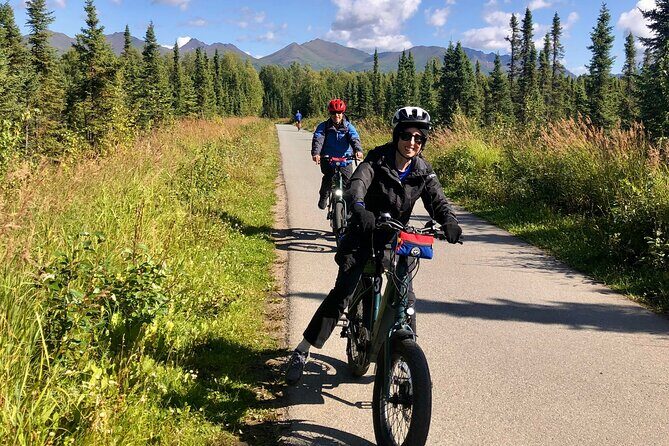
This tour is designed as a chain of short stops. The good news is you won’t spend your whole time parked. The other good news: the stops are chosen so you’re constantly alternating between story and scenery.
Stop 1: Oscar Anderson House Museum
You start with a quick visit to the Oscar Anderson House Museum. It’s a short stop, but the topic is big: Oscar Anderson and how he influenced the development of Anchorage from a tent city into a permanent city.
What I like about this kind of opener is that it gives you a framework. Once you hear the Anchorage “from tent to city” idea, the rest of the tour lands better—railroads, parks, and neighborhoods stop feeling random and start feeling connected.
Other historical tours in Anchorage


Stop 2: Delaney Park Strip and a Preserved Locomotive
Next up is the Delaney Park Strip, where you learn about the Alaska Railroad and get a tour stop by a preserved locomotive.
This stop works because it mixes history with a visible artifact. Instead of only hearing stories, you can point at something real and say, yep, this is part of how the region grew. It also helps explain why rail lines and park spaces grew side by side in the Anchorage story.
Stop 3: Tony Knowles Coastal Trail Views (Cook Inlet and Beyond)
Then you roll onto the Tony Knowles Coastal Trail. Expect a view-first stop with great angles over Cook Inlet, mountains to the west and north, and a chance for a Denali sighting depending on conditions.
This is also a stop where wildlife may make an appearance, with belugas sometimes spotted from the vantage point. Even if you don’t see them, the coastline view itself is a payoff you’ll feel in your photos.
A practical note: coastal viewpoints can mean wind. That’s exactly the kind of day where a helmet and rain gear feel like common sense.
Stops 4 and 5: Chester Creek Greenbelt and Campbell Creek Greenbelt
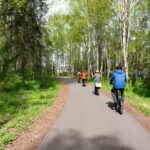
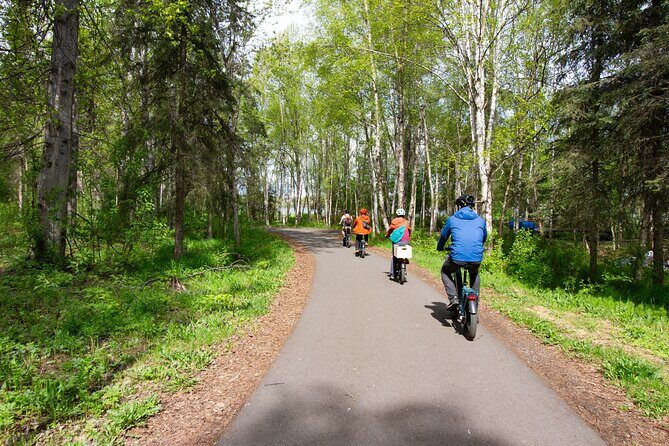
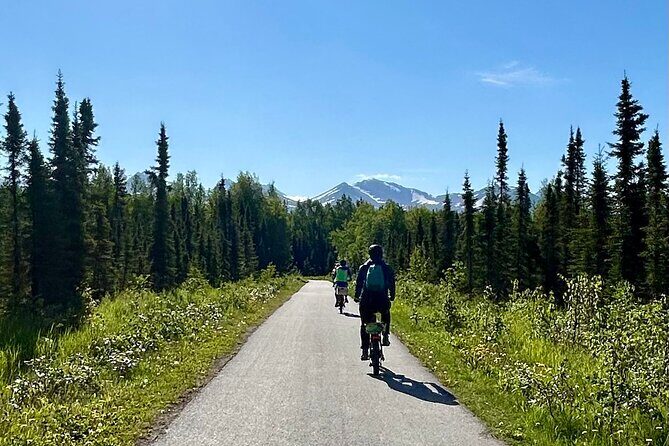
These are your longer trail segments, and they’re the heart of the “ride through nature” part of the day.
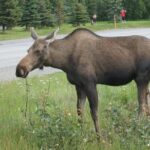
- Chester Creek Greenbelt (about 30 minutes): Expect scenic views of woods and the stream. Wildlife sightings are common, including moose and bear.
- Campbell Creek Greenbelt (about 30 minutes): A creek-side ride where wildlife is also commonly sighted.
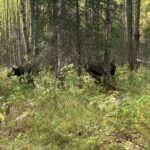
I like that the tour doesn’t pretend wildlife is guaranteed. It’s honest: you’re in good habitat, and that’s why chances are real. Just remember that wildlife viewing is about patience, not rushing up to get closer.
What to watch for while you ride:
- Keep your eyes on the trail, but when the guide cues you, pause your thinking and look outward—wildlife is often easier to spot when the group slows down together.
- Watch the stream edge and the tree lines. That’s where movement tends to show up first.
Stop 6: Alaska Railroad Depot on 1st Avenue
You swing by the Alaska Railroad depot on 1st Avenue for a brief history presentation. It’s a short stop, but it ties the railroad story together again after the Delaney Park Strip locomotive.
This is the kind of moment where the tour earns points for making the “why” clear. If you’ve ever been to a city where history feels like disconnected plaques, this approach helps you connect the dots.
Stop 7: Valley of the Moon Park
Next is Valley of the Moon Park, a beautiful wooded park with a brief historical stop.
This section is a nice reset. After the creek trails, it gives you a quieter pocket where you can take in the atmosphere without needing to interpret everything. It also adds variety, so the day doesn’t feel like one long stretch of the same scenery.
Stop 8: Westchester Lagoon and Salmon Habitat Remediation
You finish at Westchester Lagoon, with a vista of the Chugach Mountains and a view tied to salmon habitat remediation.
This is one of the more forward-looking stops because it’s about how the lagoon has changed and how wildlife-focused work can reshape an area over time. You’ll also listen to a historical presentation about those changes over the past century.
Even if you’re not a salmon-nerd (no shame), it helps you understand Anchorage as an evolving place shaped by nature and human decisions—not just a frozen-in-time postcard.
What’s Included (and What to Bring)
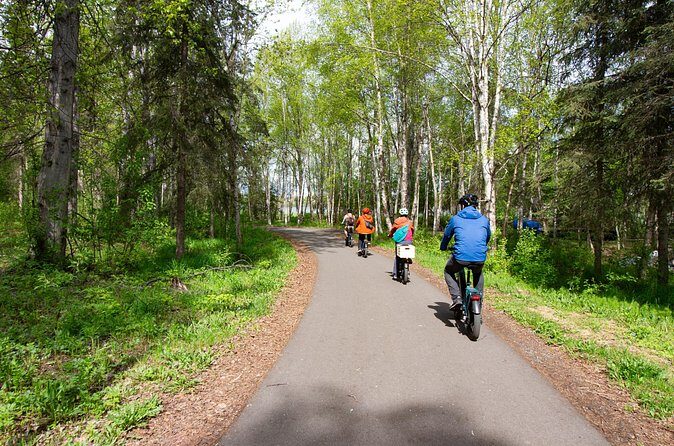
You get a lot of the hard-to-improvise stuff included:
- Coffee and/or tea
- Use of the bicycle
- Waterproof gloves
- Rain poncho
- Handlebar storage bag and bike rack
- Bicycle helmet
What’s not included:
- Bottled water
So here’s the simple move: bring water. The tour provides coffee or tea, but hydration needs don’t pause for caffeine. If you’re prone to getting thirsty while riding, don’t wait until you feel it.
Also, if you’re arriving expecting full-sun weather, plan for rain anyway. The fact you get a rain poncho and waterproof gloves tells you the organizers expect real Alaska weather swings.
The Timing: 3 Hours That Don’t Feel Like a March
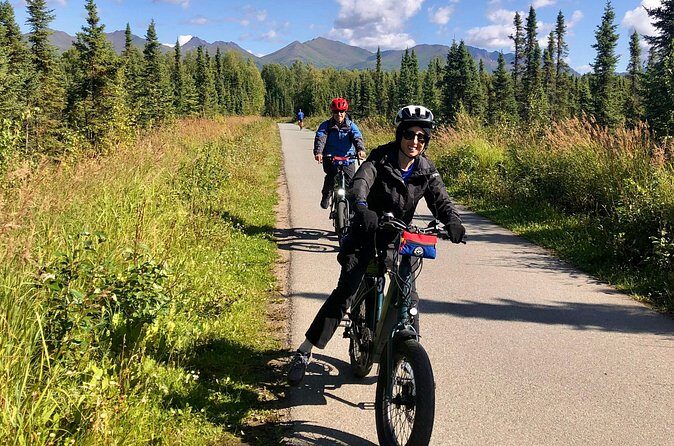
The ride is about 3 hours, and it’s structured so you’re never stuck in one mode too long. You’ll have short history stops and then trail segments, which keeps the day from feeling flat.
The short stops also help if you like learning but don’t want museum exhaustion. You’ll get the story beats without it turning into a lecture marathon.
The group is limited to 6 travelers, which is ideal for this kind of route. You’re not getting separated into a slow moving pack, and the guide can keep an eye on everyone’s comfort.
How This Tour Fits Different Travelers
This experience is a strong match if:
- You want Anchorage context without spending your whole day in cars
- You like a light-to-moderate physical effort with e-bike support
- You’re curious about the Alaska Railroad and how it shaped development
- You enjoy parks and trails and are open to wildlife sightings (even if you can’t control them)
I’d think twice if you:
- Don’t want to ride for about 3 hours, even on an e-bike
- Have concerns about biking on trails (the tour is built for moderate fitness, but it’s still cycling)
On the plus side, the guide includes an e-bike lesson, and that helps many first-timers settle in quickly.
Booking Timing: When to Lock It In
This tour is typically booked about 95 days in advance on average. That’s a signal: if your dates are fixed, don’t wait for the last minute. Smaller groups and popular routes have a habit of filling up when the weather window looks good.
If your trip is flexible, you might still find options, but planning ahead keeps your vacation calm instead of stressful.
Should You Book the eBike History Tour of Anchorage?
Yes—if you want a practical, scenic way to learn Anchorage’s story while getting outside. The included gear, the pre-ride e-bike lesson from Lee, and the smart mix of railroad history plus coastal and creek scenery make it feel like good value, not just a “tour for the sake of touring.”
Book it if you’re comfortable with moderate effort and like the idea of cycling past parks where wildlife is a real possibility. Skip it only if you’re strongly opposed to being on a bike for a few hours, even with electric assist.
FAQ
What’s the tour length?
The tour runs for about 3 hours.
Where does the tour start and end?
It starts at Freewheel Art & E-Bike Tours at 1666 Cache Dr, Anchorage, and ends back at the same meeting point.
What’s included with the tour price?
You get coffee and/or tea, use of the bicycle, waterproof gloves, a rain poncho, a handlebar storage bag and bike rack, and a bicycle helmet.
Do I need to bring water?
Bottled water is not included, so it’s a good idea to bring your own.
Is there a limit on group size?
Yes. The maximum group size is 6 travelers.
Can I cancel for a full refund?
Yes. You can cancel up to 24 hours in advance for a full refund. If you cancel less than 24 hours before the start time, the amount paid is not refunded.