REVIEW · ANCHORAGE
Winter Waterfall Walk
Book on Viator →Operated by Go Hike Alaska · Bookable on Viator
Winter turns Barbara Falls into a sculpture. On this Anchorage winter walk, I like the way the ice-dammed South Fork Eagle River sets up your hike before you even reach the falls, and I really appreciate that the guide helps you spot details in the boreal forest as you walk. The 25-foot waterfall and its icicles, ice bridges, and frozen-in-time water are the main event. The catch is simple: you still need solid winter footwear and clothing, and you’ll be walking roughly two miles over uneven, rolling winter ground.
This tour is built for people who want Alaska scenery without doing a hard training plan. You meet at the William A. Egan Civic & Convention Center, and transport to the park is included, so you can focus on staying warm and getting good photos. With a small group capped at 12, the guide can slow down, answer questions, and adjust when someone needs a breather.
What you’re really buying is a guided look at how winter reshapes a river, a waterfall, and an entire forest. I went in expecting a “pretty walk,” and left feeling like I could actually explain what I saw—especially the ice-dam formations and the living plants that survive under snow.
In This Review
- Key things I’d plan around
- Ice-dam magic at Barbara Falls in the Anchorage winter
- The Egan Center start: simple logistics, zero hotel hunting
- How long is this really: 3 hours on paper, longer on the ground
- Stop one: the South Fork Eagle River ice-dam formations
- The 25-foot Barbara Falls base: icicles, ice bridges, and frozen water
- The short nature walk: boreal forest details you’ll actually remember
- Gear that’s provided vs. what you must bring
- Guides and small-group pace: what makes it feel personal
- Price and value: why $129 can feel fair
- Who should book this winter waterfall walk
- Should you book Winter Waterfall Walk to Barbara Falls?
- FAQ
- FAQ
- Where do I meet for the tour?
- Is transportation from Anchorage included?
- What winter gear is provided, and what should I bring?
- How much walking is involved?
- What’s the group size?
- Are service animals allowed?
- Is there a snack included, and can you accommodate dietary restrictions?
- What happens if the weather is bad?
Key things I’d plan around
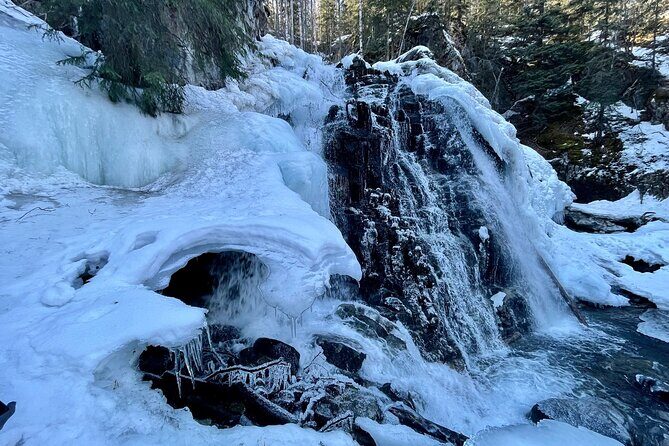
- Barbara Falls at 25 feet: look for icicles, ice bridges, and frozen water effects that change day to day
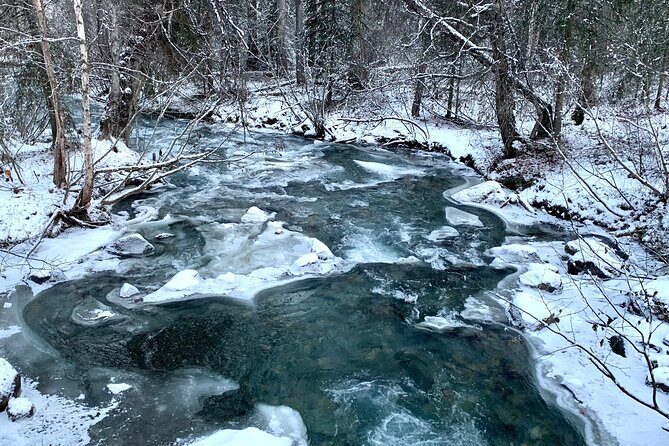
- Ice-dam river scenes first: you’ll pause for the South Fork Eagle River’s strange ice growth
- Microspikes and poles offered: traction and balance help you enjoy the walk instead of fighting it
- Small group limit (12): easier pace, more guide attention, and more time at the best photo spots
- Boreal forest education: lichen, moss, and tree species get real-world attention on the trail
- Guides like Matthew, Mike, Bryce, and Leah: many focus on safety, warm breaks, and picture-making tips
Ice-dam magic at Barbara Falls in the Anchorage winter
Winter waterfall walks can either be a quick look or a real experience. This one leans toward the second option, because you don’t start at the falls and then rush away. You start along the South Fork Eagle River and build up the story of what cold water and fast-moving flow do when temperatures drop.
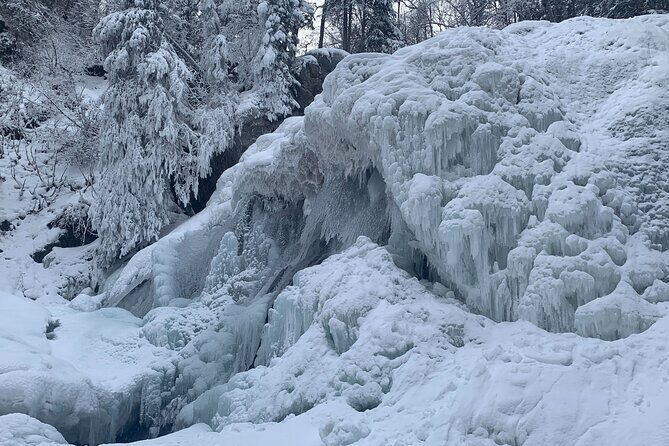
Barbara Falls in winter looks dramatic in a different way than summer. Expect ice crystals forming over the water, ice-dam buildups that can slow and raise the water level, and icicles that hang like frozen punctuation. When you reach the base of the waterfall, you’re looking at a 25-foot drop framed by ice bridges and shimmering frozen details. Even if the waterfall isn’t fully “running,” the blend of frozen and flowing effects can be its own kind of amazing.
The other half of the wow is the forest. After the main waterfall stop, you walk through a boreal forest where white spruce, paper birch, and aspen show up in the frozen understory. The guide’s explanations make lichen and moss more than decoration—you understand why these small life forms matter, and how they survive in a place that stays cold for a long time.
Other walking tours we've reviewed in Anchorage

The Egan Center start: simple logistics, zero hotel hunting
Meeting at the William A. Egan Civic & Convention Center keeps things straightforward. Transport to the park is included, and you end back at the same meeting point. That means you’re not juggling rental cars, rideshares, or complicated drop-offs.
One practical note: there’s no hotel pickup. If you’re staying outside the city core, plan how you’ll get to the Egan Center before your start time. Once you’re there, you can relax. The group handles the rest, and you’ll spend your energy on the hike instead of coordinating.
Also, this is set up for people who can show up and go. You’ll sign a waiver prior to departure, and you’ll want to arrive dressed and ready for winter conditions because the cold part starts right away.
How long is this really: 3 hours on paper, longer on the ground
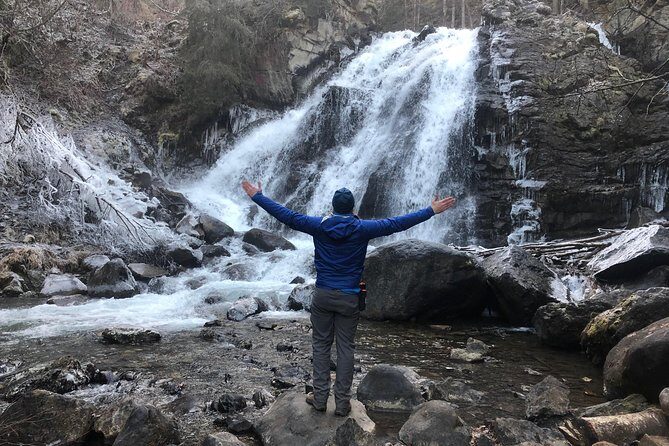
The tour duration is listed as about 3 hours, and that’s what you should use for your planning. At the same time, the walking portion is where winter time often expands. You’re looking at around two miles of walking over flat pavement or uneven rolling terrain over roughly two hours, plus time for pauses and viewing at ice and waterfall spots.
So here’s my advice: treat this as a morning or early afternoon slot where you can come back a bit tired and happy. If your schedule is tight, give yourself a buffer rather than trying to stack another activity right after.
The good news is the guide can help manage that pacing. Many groups keep it comfortable, with stops for photos and mini breaks when needed. If you’re rehabbing an injury or just cautious on ice, you’ll likely feel less rushed than on a self-guided hike.
Stop one: the South Fork Eagle River ice-dam formations
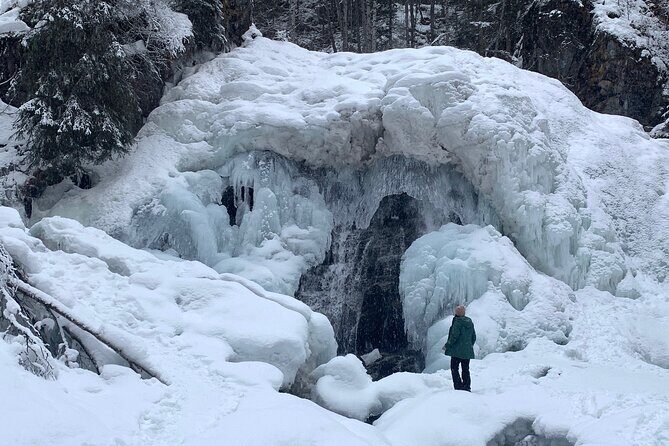
The first major payoff is how the river looks before you even see the falls. You’ll follow the South Fork Eagle River and stop to observe ice-dam formations created by frigid-cold and fast-moving water. This is one of those Alaska “what am I even looking at” moments—ice crystals can appear to grow from the surface, and the water can create strange raised levels as flow gets slowed.
Those pauses matter. They’re where you get context. Once you’ve seen the ice-growth process up close, the waterfall stop makes more sense, because you’re watching the same forces work at a larger scale.
Bring your camera settings mindset even if you only use a phone. Many guides focus on capturing the best angles from stable spots, and some also share simple phone photography tips along the way. The waterfall and river scenes make for photos that look “too perfect,” but you’ll usually earn them the right way—by taking a moment at the best ledges and not rushing through the freeze-frost details.
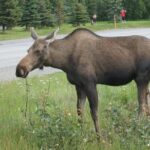
Wildlife can also show up in the broader area. In addition to the expected moose and birds, I’ve seen mention of bears spotted near the road during the drive segment. That’s not something you can count on, but it’s a reminder that winter wildlife sometimes shows itself when you’re not staring at your feet.
The 25-foot Barbara Falls base: icicles, ice bridges, and frozen water
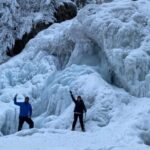
Once you reach the base of Barbara Falls, the main viewing block delivers. The waterfall is about 25 feet tall here, and winter turns it into a mix of icicles and frozen-in-time sections. Look for ice bridges where water has frozen into shapes that look like they shouldn’t exist in nature.
If you’re coming from the idea that waterfalls must always be fully “flowing,” winter can surprise you. Some seasons or temperatures mean more frozen structure than rushing water. That said, the contrast can be the point. You get to see both the hard ice and the underlying water action, even when it’s slowed.
From a photo standpoint, this is where the guide’s role really shows. People often want a group shot but don’t know where to stand for balance and clean sight lines. A good guide helps you find safer footing and better angles so you spend less time improvising with your knees in the snow.
Other walking tours we've reviewed in Anchorage


The short nature walk: boreal forest details you’ll actually remember
After Barbara Falls, you continue on a short nature walk that’s designed to help you read the forest. You’ll walk through a winter world where towering trees like white spruce, paper birch, and aspens hold onto the frozen ground beneath them.
The guide will point out the biological small stuff too: lichens and mosses. In a winter forest, these life forms don’t just look pretty—they’re part of how the ecosystem survives. You’ll also hear how trees and ground cover respond to cold temperatures, short days, and limited growing seasons.
This portion is also where wildlife spotting often makes sense. In winter light, animals can be easier to spot against snow and dark trunks. You may see moose, hare, rodents, or birds, depending on conditions. Even if you don’t spot wildlife, the forest explanations give you something to look for besides trees that all look the same from a distance.
Gear that’s provided vs. what you must bring
This is a winter walk, and traction is the whole game. The tour can provide microspikes for icy conditions, plus trekking poles, day packs, and snow gaiters upon request. There are also snacks included—typically a granola bar. If you have dietary restrictions, you can let the operator know ahead of time so you’re not stuck with a snack you can’t eat.
What you need to bring is on you. Snowboots or high-top hiking shoes are required, and you’re responsible for appropriate winter clothing for snow. I can’t stress this enough: wool socks and a warm outer layer matter more than having the right brand of jacket. Your feet and legs are what will make the walk enjoyable instead of miserable.
You’ll also sign a waiver before you go. If you have injuries or balance concerns, it’s worth telling the guide early. I’ve seen examples of guides adjusting with patience and helping people with spikes and footing, including bringing extra supports when conditions required it.
Service animals are allowed, and the tour is near public transportation, so you’re not locked into one kind of travel style to participate.
Guides and small-group pace: what makes it feel personal
The most consistently praised part of this experience is the guide. Names that show up often include Matthew, Mike, Matt, Bryce, Leah, and Isaiah. The common thread is that they guide with confidence and attention, not just facts thrown at you from a distance.
Here are the strengths that show up again and again:
- Safety-first pacing, with help getting traction gear on correctly
- Knowledge delivered in a way that connects to what you’re seeing right then
- Stops timed for photos, not just for getting through the route
- Friendly, human personalities that make you feel comfortable asking questions
Some guides go the extra mile in comfort too. There are mentions of guides bringing snow shoes when needed and even hot tea afterward. Those small warmth moments are a big deal in Anchorage winter, because they turn the hike from a chore into a treat.
With a maximum group size of 12—and often smaller in practice—the experience stays flexible. If someone needs a mini break, it’s not a big interruption. And if you want that one perfect shot of the ice bridge, you’ll usually get a chance without the whole group falling behind.
Price and value: why $129 can feel fair
At $129 per person, you might wonder if it’s too much for a short winter walk. Here’s how I see the value.
You’re getting:
- Transport from the Egan Center to the park included, with return back
- Entry/admission that’s listed as free
- Microspikes and traction support offered, plus poles, day packs, and snow gaiters on request
- A guided hike with nature storytelling focused on the forest and river you’re seeing
- A snack included
In other words, you’re not paying only for scenery. You’re paying for safer winter movement, interpretation of what you’re looking at, and the convenience of not having to run a logistics puzzle.
If you’re traveling light and don’t already have ice traction gear, this is where the cost can make sense quickly. Buying or renting traction gear on your own can eat into your budget fast. And if you do have the gear, you’ll still likely enjoy the guided stops at Barbara Falls and along the ice-dam river sections.
One more value point: this hike works as an Alaska introduction. If you’re here for a short trip, it gives you the mix of winter drama and boreal-forest understanding without a full-day commitment.
Who should book this winter waterfall walk
Book this if you:
- Want an Anchorage winter experience that feels scenic and guided, not technical
- Can walk about two miles on snow-influenced terrain, including uneven rolling ground
- Like nature education that ties to what you see—lichen, moss, spruce, birch, and the river-ice effects
- Want a good photo outing with enough stops to frame ice bridges and icicles
It may not be the best fit if you:
- Don’t have appropriate winter footwear or clothing and don’t plan to borrow or request the gear you can
- Expect a gentle stroll with no uneven ground at all
- Want a heavy workout hike rather than a guided viewing walk
Should you book Winter Waterfall Walk to Barbara Falls?
If you’re in Anchorage and you want the winter version of Alaska that looks like science-fiction but feels real under your boots, I think you should book it. The ice-dam river start plus a 25-foot Barbara Falls viewing base gives you two different kinds of winter beauty in one outing, and the guide support makes the difference between seeing things and understanding them.
I’d decide based on one question: can you comfortably handle about two miles of walking over winter ground? If yes, this tour is a solid value for the convenience, traction support, and expert guidance you get. If you’re unsure about your footing, lean on the gear request options early and tell the guide what you need—they’re used to helping people have a good time in cold conditions.
FAQ
FAQ
Where do I meet for the tour?
You’ll meet at the William A. Egan Civic & Convention Center at 555 W 5th Ave, Anchorage, AK 99501. The tour ends back at the same meeting point.
Is transportation from Anchorage included?
Yes. Transport from Anchorage’s Egan Center to the park is included as part of the tour experience.
What winter gear is provided, and what should I bring?
The tour can provide microspikes for icy conditions, trekking poles, day packs, and snow gaiters upon request. You’re responsible for bringing appropriate winter clothing and snow boots or high-top hiking shoes.
How much walking is involved?
You should be able to walk at least about 2 miles on flat pavement or about 2 miles of uneven rolling terrain over the course of roughly 2 hours.
What’s the group size?
This activity has a maximum of 12 travelers.
Are service animals allowed?
Yes, service animals are allowed on this tour.
Is there a snack included, and can you accommodate dietary restrictions?
A granola bar snack is included. If you have dietary restrictions, you should let the operator know so they can provide a different snack option.
What happens if the weather is bad?
This experience requires good weather. If it’s canceled due to poor weather, you’ll be offered a different date or a full refund. Free cancellation is available up to 24 hours in advance for a full refund.